Water Leak Detection and Automatic Shut Off Valves: A New Homeowner’s Guide

Buying a home is exciting. Watching it get ruined by a hidden water leak is not.
According to the 2023 Home Water Damage Prevention Report summarized by Insurance Journal, non‑weather water damage from things like leaking pipes and appliances is the second most common cause of home insurance claims in the U.S. Yet only about 17% of homeowners report having any kind of water sensor installed, compared with 84% who have smoke detectors.
This guide will walk you through how water leak detection and automatic shut off valves work, what they cost, where to start as a new homeowner, and how to make a smart plan that fits your budget.
Why water leaks are such a big risk for new homeowners
Water damage often sneaks up quietly. A tiny drip behind a wall or under a sink can go on for weeks or months before anyone notices. By then, you may be dealing with damaged cabinets, flooring, drywall, and even mold.
A 2024 U.S. Home Trends Report from LexisNexis notes that non‑weather‑related water claims remain a major long‑term cost driver for insurers, even though there was a short‑term dip in 2023. That means the problem is not going away.
Industry estimates compiled in a 2025 cost guide by Builds and Buys suggest the average water‑damage insurance claim for U.S. homes is around $11,000, and roughly 1 in 60 insured homes files a water‑damage claim in a typical year. Other restoration data summarized by Hauser places many significant leak events in the five‑figure range.
For a new homeowner, that can eat an entire emergency fund in one incident.
Common leak scenarios in a typical home
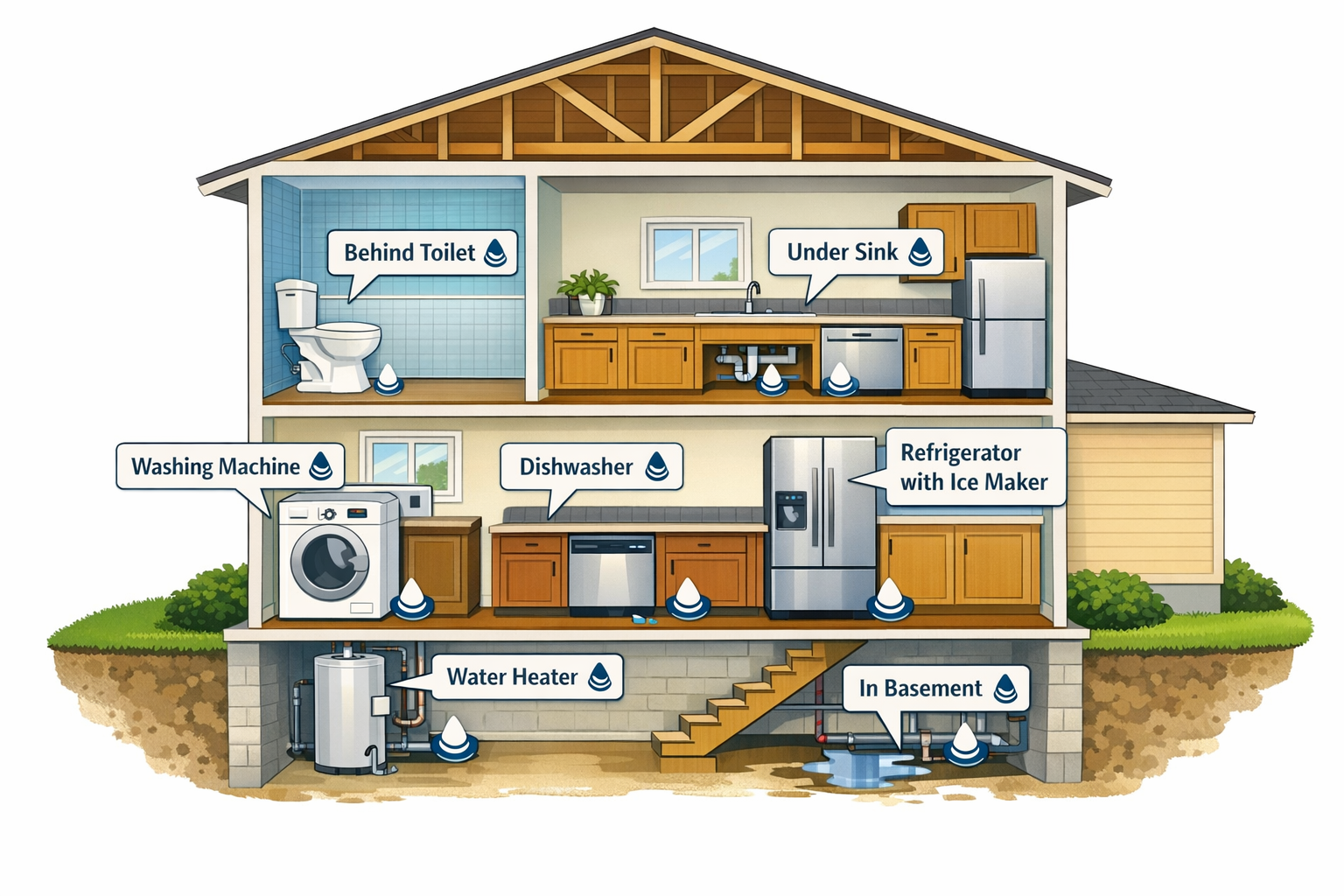
Some of the most frequent sources of non‑weather water damage include:
- Washing machines with cracked hoses or loose connections
- Dishwashers that overflow or leak slowly from worn seals
- Refrigerators with ice makers where a tiny supply line fails
- Water heaters that start to drip or rupture near the end of their life
- Toilets with failed supply lines or wax rings
- Under‑sink plumbing where a slow drip goes unnoticed in the back corner
- Frozen or burst pipes in colder climates
An IoT leak‑detection provider cited by TrustHab estimates that undetected leaks can cost between about $1,300 and $5,600 per affected unit, even in multi‑family housing, before you even factor in mold remediation or being displaced from your home. Single‑family homes can see even higher losses.
The good news: unlike storms or floods, most of these leaks are preventable or at least containable if you catch them early.
Leak detection basics: from simple alarms to smart shutoff systems
Leak protection comes in a few main flavors. You do not have to buy everything at once. Think of it like layers of defense.
1. Simple point‑of‑use leak alarms
These are small battery‑powered devices that sit on the floor or in a pan. When water touches the sensor, they sound a loud alarm.
- Cost: Typically $25 to $100 per sensor, according to the 2025 cost guide from Builds and Buys
- Coverage: A few sensors (often $200 to $800 total) can cover key spots in an average home
- Pros: Inexpensive, easy DIY installation, no plumbing work
- Cons: They only help if someone is home to hear the alarm and act quickly
These are good first‑step protection for:
- Under kitchen and bathroom sinks
- Behind toilets
- Next to your water heater
- Behind the washing machine and dishwasher
- Near a basement sump pump or utility area
Industry guidance summarized by TrustHab agrees that these are the highest‑risk locations where leaks often stay hidden.
2. Smart leak sensors with app alerts
Smart sensors work like basic alarms but also connect to Wi‑Fi and send alerts to your phone.
According to Water Damage Advisor, DIY smart water sensors commonly cost $40 to $200 per device at hardware stores.
- Pros: You get notifications even if you are at work or on vacation
- Cons: Most models still cannot shut off water by themselves; you must act
These are ideal for new homeowners who travel often or own a second home.
3. Whole‑home smart systems with automatic shut off valves
This is the “top shelf” option. Modern systems typically include:
- A flow sensor and automatic shutoff valve installed on your main water line
- Optional wireless moisture sensors in key locations
- A hub and smartphone app to monitor usage and send alerts
According to Hauser’s leak‑detection overview, many modern systems pair moisture sensors with a central hub and shutoff valve that can close your main supply as soon as a leak is detected so a small leak does not become a major claim.
Independent reviews summarized by Tom’s Guide note that premium systems like Flo by Moen or Phyn Plus can:
- Monitor water flow and pressure at the main line
- Use software or AI to learn your normal water use
- Detect patterns like a burst pipe or continuous small flow
- Automatically shut off the water if something looks wrong
Cost‑wise, there are two ways to look at it:
- Tom’s Guide reports that many automatic shutoff detectors with integrated valves start around $400 for the device alone and typically require pro installation
- The Builds and Buys 2025 guide estimates whole‑home systems with automatic shutoff at about $1,000 to $1,600 installed for a single‑family home, with $600 to $1,000 for equipment and $400 to $600 for professional installation
That may sound steep, but compared with an average claim around $11,000, installing one can pencil out quickly, especially if it prevents even a single major event.
How automatic shut off valves work (in plain English)
If you are a first‑time homeowner, plumbing terms can feel intimidating. Here is the simple version of how automatic shut off valves usually work.
Step 1: Monitoring your home’s water
The device is installed on your main water line, usually near where water enters your home. It constantly measures:
- How much water flows through
- How long water has been running
- In more advanced models, pressure changes in your pipes
Over time, it learns what is “normal” for your household. For example:
- Morning showers for 20 minutes
- Dishwasher running most evenings
- Irrigation system at night
Step 2: Spotting unusual patterns
The system looks for red flags, such as:
- Water running nonstop for a long time
- Very high flow that looks like a burst pipe
- Continuous low‑level flow with no one home that could indicate a slow leak
Some models also take signals from individual moisture sensors. If a sensor detects water under a sink, it can tell the valve to act.
Step 3: Shutting off the water automatically
When the system thinks there is a problem, it can:
- Send you an alert
- Trigger the valve to close the main water supply
You can usually override this from your phone if it is a false alarm, but in many emergencies, homeowners are grateful the system closed the valve for them.
Step 4: Manual backup
You should still know where your manual main shutoff valve is and how to use it. If power or Wi‑Fi goes out or a smart device fails, you can always:
- Turn off water at the main using the manual valve
- Open faucets to relieve pressure
- Call a plumber to address the underlying issue
A quick HomeWalk‑style tip during your next walkthrough: locate and label your main water shutoff with a tag so anyone in the home can find it quickly.
What leak protection actually costs (and how to budget for it)
New homeowners juggle many expenses, so it helps to see real‑world numbers.
One‑time vs ongoing costs
Here is a simple breakdown using the research summarized above:
Basic DIY coverage
- Simple point‑of‑use leak alarms: about $25 to $100 per sensor
- Smart leak sensors with app alerts: about $40 to $200 per device
- Total to cover key locations in an average home: roughly $200 to $800
Whole‑home smart shutoff systems
- Premium automatic shutoff units: often $400+ for the device alone
- Typical installed cost: about $1,000 to $1,600 for a single‑family home (equipment plus professional install), according to the 2025 Builds and Buys guide
Professional leak detection services
Sometimes you suspect a leak but cannot find it. According to Water Damage Advisor, professional leak‑detection visits often run $175 to $250 per call.
At that rate, paying for repeated one‑time investigations can quickly approach the cost of installing some permanent sensors.
Potential insurance benefits
Some insurers and manufacturer programs offer discounts or deductible perks if you install certified smart leak detection or automatic shutoff devices.
Tom’s Guide notes that products like Flo by Moen connect to programs that may help with water‑damage deductibles (for example, up to a certain amount) or insurance premium discounts. Details vary, so always:
- Ask your insurer: “Do you offer discounts or deductible help if I install a smart leak detector with automatic shutoff?”
- Keep receipts and any documentation your insurer might need
Do not assume savings are guaranteed, but view them as potential bonuses that can improve the payback period on your investment.
A step‑by‑step leak protection plan for new homeowners
You do not need to be a plumber or tech expert to protect your home. Here is a simple, staged approach tailored for new homeowners.
Step 1: Find your main shutoff and do a quick leak sweep
Right after you move in or during your HomeWalk‑style walkthrough:
- Locate the main water shutoff valve.
- Take a photo of it
- Label it with a tag or tape so guests and family can see it
- Inspect high‑risk areas. Look under every sink, behind toilets, around the water heater, washer, dishwasher, and refrigerator. Check for:
- Active drips
- Corrosion on shutoff valves
- Swollen or discolored cabinets or walls
- Fix visible issues early. A small drip now is usually cheaper to fix than damaged flooring later.
Step 2: Add basic sensors in the riskiest spots
Start with simple, affordable protection:
- Place leak alarms or smart sensors:
- Under each sink
- Behind toilets
- By the water heater
- Near the washing machine and dishwasher
- In the basement or utility room
- Choose smart sensors if you want phone alerts while away
This alone can dramatically cut your odds of an expensive surprise.
Step 3: Decide if whole‑home automatic shutoff is right for you
Consider investing in a full system if:
- You travel frequently or own a second home
- Your home has finished basements, wood floors, or other high‑value finishes
- You live in a region with freeze risk and older plumbing
- You simply like the peace of mind of automatic protection
Before you commit:
- Get 2 to 3 quotes from licensed plumbers or installers
- Ask which systems they recommend and why
- Confirm whether your Wi‑Fi and electrical setup will support the device
Then compare the installed cost (say, $1,200) with the potential cost of one major claim (often $10,000+).
Step 4: Create a simple “leak emergency” plan
Make sure everyone in the home knows how to respond if a leak happens:
- Turn off the main water (or confirm your automatic valve has done it)
- Avoid walking in deep water near outlets or appliances
- Move belongings away from the leak if it is safe
- Call a plumber and, if damage is significant, contact your insurer
Keep key phone numbers posted in a visible place or saved in a shared note.
Bringing it all together
Water damage is one of the most common and costly problems homeowners face, yet most homes still do not have even basic leak sensors installed. A few well‑placed alarms or smart sensors, paired with an automatic shutoff valve if your budget allows, can turn a potential $11,000 disaster into a minor inconvenience.
As a new homeowner, you can:
- Learn where your main shutoff valve is and label it
- Add affordable leak sensors to the riskiest spots
- Consider a whole‑home smart shutoff system for long‑term peace of mind
- Ask your insurer about possible discounts or benefits
HomeWalk is built to help you understand your new home room by room, spot issues early, and keep maintenance from feeling overwhelming. If you are in the process of buying or have just closed on a new place, use HomeWalk as your companion to document plumbing locations, track upgrades like leak detectors, and build a simple checklist so your home stays safe, dry, and protected for years to come.
Related Resources
Keeping Your New Home Warm in Winter: A Practical Guide for First-Time Homeowners
Learn simple, cost‑effective ways to keep your new home warm in winter, lower heating bills, and avoid common first‑time homeowner mistakes.
How Long Should a Water Heater and Furnace Last? A Homeowner’s Lifespan Guide
Learn how long water heaters and furnaces usually last, warning signs of failure, and simple maintenance tips to extend their life.
Winter Landscaping Tips: Transform Your Yard into a Cozy Hideaway
Discover winter landscaping strategies to save energy and brighten your yard in colder months.